
What the weather is like at 3,454–3,571 m
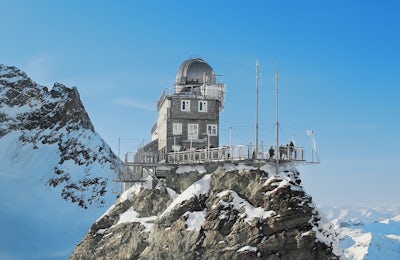
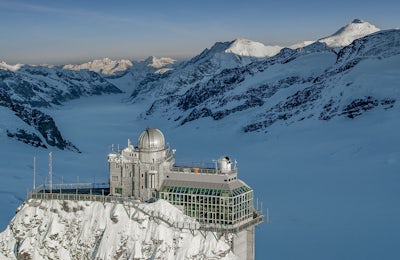
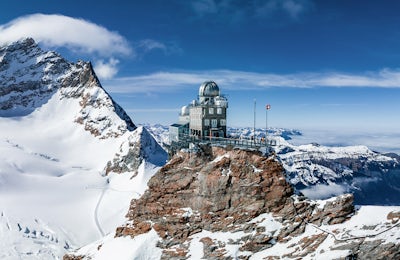
The train arrives at 3,454 m, and the Sphinx terrace is at 3,571 m, the height of the MeteoSwiss weather station. Up there the yearly average is −6.7 °C, and on 253 days a year the temperature never rises above freezing.
Summer (June to August)
July and August are the mildest months, with an average of 0.4 °C and 0.6 °C. A typical afternoon reaches about 3.5 °C, and nights drop to around −2 °C. Even in August there are about five days on which the thermometer stays below zero all day. June is noticeably colder, at −1.5 °C on average. Summer brings the most sunshine, around 180 hours a month in July and August, and the lightest wind.
Winter (December to February)
From December to February the monthly average sits between −11.7 °C and −13.3 °C. Daytime highs stay around −9 to −10 °C and nights fall to about −15 to −16 °C. Practically every day is an ice day. Sunshine drops to about 100–125 hours a month, and the wind is at its strongest: 7.9 m/s on average in December, about 28 km/h.
Spring and autumn
March is still deep winter up here (−11.6 °C on average), and even May averages −5.2 °C. Autumn turns cold quickly: September averages −2.4 °C, October −4.9 °C and November −9.2 °C.
Jungfraujoch climate by month
| Month | Average °C | Average max °C | Average min °C | Sunshine (h) | Ice days | Wind (m/s) |
|---|---|---|---|---|---|---|
| January | −12.5 | −9.5 | −15.5 | 117 | 30.9 | 7.7 |
| February | −13.3 | −10.2 | −16.3 | 123 | 27.7 | 7.5 |
| March | −11.6 | −8.6 | −14.4 | 161 | 30.5 | 7.3 |
| April | −9.4 | −6.3 | −12.0 | 160 | 28.1 | 6.5 |
| May | −5.2 | −2.1 | −7.8 | 152 | 22.2 | 6.0 |
| June | −1.5 | 1.7 | −4.0 | 170 | 10.7 | 5.3 |
| July | 0.4 | 3.4 | −2.1 | 181 | 5.8 | 5.1 |
| August | 0.6 | 3.5 | −1.7 | 183 | 4.7 | 4.8 |
| September | −2.4 | 0.5 | −4.7 | 175 | 12.9 | 5.6 |
| October | −4.9 | −2.2 | −7.4 | 145 | 21.1 | 6.5 |
| November | −9.2 | −6.5 | −11.8 | 106 | 27.8 | 7.6 |
| December | −11.7 | −8.7 | −14.5 | 101 | 30.6 | 7.9 |
| Year | −6.7 | −3.8 | −9.4 | 1,773 | 253 | 6.5 |
Climate normals 1991–2020, station Jungfraujoch (3,571 m). Ice day: the maximum temperature stays below 0 °C. Source: MeteoSwiss.
Clear or cloudy? Check the webcams first
Averages tell you what to pack, not whether you will see anything. The view from the top is what you are paying for, so look at the live pictures before you buy and again on the morning you travel. If the Sphinx camera shows nothing but white, the summit is in cloud.
Jungfrau Railways runs ten live cameras on its official webcam page:
- Jungfraujoch – Top of Europe (Sphinx): the summit itself
- Jungfrau east ridge (Ostgrat)
- Eigergletscher: where the Eiger Express meets the train
- Eiger Express
- Grindelwald Terminal
- Lauberhorn – Kleine Scheidegg
- Männlichen top station
- First – Schreckfeld
- Harder Kulm – Interlaken
- Schynige Platte
For the forecast, see the official weather page; for trains and lifts that are running today, the operating information.
Tickets from the official Jungfrau Railways webshop can be cancelled free of charge until 23:59 on the day before the first day of validity. Once the ticket is valid, refunds are not possible. For tickets bought at a counter or ticket machine, the official FAQ mentions a processing fee of CHF 10 per booking. Tickets from resellers, including the partner offers on this page, follow the reseller's own terms. In practice, the evening before is your last free decision point: look at the webcams and the forecast then.
What to wear on the Jungfraujoch
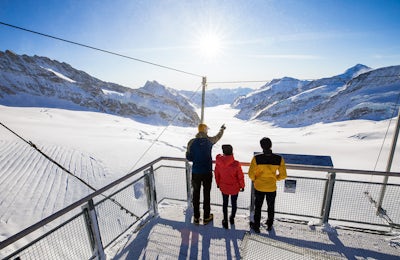
Jungfrau Railways asks visitors to wear warm clothing at this altitude, even in midsummer. Dress for winter and take layers off on the train rather than the other way round.
- Warm layers and a windproof jacket, plus gloves and a hat. The terrace is outdoors and the wind makes it feel colder than the table suggests.
- Shoes with good grip. Outdoor decks can be icy even in July; fashion trainers are a poor choice.
- Sunglasses and good sunscreen. The operator calls them essential on the glacier, even in bad weather. Add lip balm with a high SPF.
- Water. According to Jungfrau Railways, each person loses around 200 ml of fluid per hour through breathing at this altitude.
- A power bank in an inside pocket: phone batteries run down faster in the cold.
Altitude sickness and who should not go
The air is noticeably thinner at 3,454 m. Jungfrau Railways says altitude sickness can develop from about 2,500 m, and if you get it, you need to go down quickly. Move slowly, drink water and do not push on for one more photo if a headache or nausea gets worse.
The operator does not recommend the trip:
- from the seventh month of pregnancy
- for children under two
- for anyone with a cold or fever
If that applies to you on the day, it is worth moving the trip; with a webshop ticket that is free until the evening before.
Getting there: our guide to the Jungfrau Railway covers the routes and journey times, and the price guide the tickets.