
Swiss Travel Pass at the Jungfraujoch: the honest map of benefits
The Swiss Travel Pass is marketed as an all-in-one key for Switzerland, and for many first-time visitors that description is fair. You ride long-distance trains without buying a ticket for each leg, you hop lake boats on impulse, and you treat mountain excursions as a buffet rather than a series of scary counters. Then you open the Jungfraujoch page and see words that sound like small print: 25 percent reduction, not “free”.
That wording is the whole story in two words. The Jungfraujoch is expensive infrastructure maintained year-round in an extreme climate. Swiss public policy treats many valley railways as integrated transport; the summit cogwheel inside the Eiger and Mönch is closer to a priced visitor attraction with scheduled departures. The Swiss Travel Pass therefore behaves like a polite national guest: it covers your ride across Switzerland to the Bernese Oberland, then expects you to buy a reduced mountain ticket for the final climb.
This guide translates the 2026 public tariff snapshot into plain English. It is not the official shop. Always confirm numbers in the basket on jungfrau.ch or with your reseller on the day you pay—currency display, pass validity windows, and promotional bundles can shift.
What is included versus what you still buy
On a typical itinerary from Zürich or Geneva, your Swiss Travel Pass covers the mainline ride toward Interlaken in the same way it covers other pass days: board, sit, leave. From Interlaken Ost outward into the Jungfrau region, the pass continues to behave like normal pass travel on many advertised routes, subject to the Swiss Travel System map for your pass year.
For the Jungfraujoch itself, you purchase a separate Jungfraujoch ticket that encodes the 25 percent Swiss Travel Pass reduction on the mountain fare. Inspectors on the cogwheel line care about that barcode, not about your general pass enthusiasm.
- Included pattern: wide national travel to your Bernese Oberland hub, plus many regional hops that appear as pass lines on the official map
- Reduced pattern: 25 percent off the published Jungfraujoch ticket from your chosen origin (Interlaken Ost, Grindelwald Terminal, Lauterbrunnen, Wengen, and so on)
- Always separate in 2026 peak: mandatory seat reservation CHF 10 per person from 1 May to 31 October on the Jungfrau Railway for ordinary travel patterns
If you are comparing passes visually, bookmark our full Jungfraujoch price guide for the adult return table and the seat-fee explanation, then return here for pass-specific strategy.
Numbers that matter: Swiss Travel Pass versus rack rate
The table below uses the April 2026 public adult return snapshot used elsewhere on this site. It is a planning anchor, not a contract.
| Route (adult return) | Rack rate | With Swiss Travel Pass (−25%) | You save |
|---|---|---|---|
| Interlaken Ost – Jungfraujoch | CHF 234.80 | CHF 176.10 | CHF 58.70 |
| Grindelwald Terminal – Jungfraujoch | CHF 100.60 | CHF 75.45 | CHF 25.15 |
| Lauterbrunnen – Jungfraujoch | CHF 152.40 | CHF 114.30 | CHF 38.10 |
Figures follow the public overview on jungfrau.ch. Last cross-check: April 2026.
Notice how staging from Grindelwald Terminal via the Eiger Express changes the absolute francs even though the percentage stays 25. Interlaken convenience is lovely; Grindelwald staging is often the sharper budget move for independent travellers who do not mind an extra connection.
The 25 percent Swiss Travel Pass reduction is not a coupon you combine with the Good Morning ticket (20 percent off rack with early-train rules). In most baskets you pick one logic tree: pass-based reduction, Half-Fare-based reduction, or a special product such as Good Morning. Let the official fare engine decide; do not assume forum arithmetic.
Swiss Travel Pass versus Half-Fare: who wins your holiday?
Swiss residents argue about Halbtax the way they argue about fondue cheese blends. Visitors usually choose between a Swiss Travel Pass for a short intense trip and a Half-Fare Card for slower, sparser travel. For the Jungfraujoch specifically, Half-Fare often produces a lower mountain fare because the public table is structured around 50 percent reductions on many legs—but you still pay for each train you ride, and you must buy tickets for long mainline sectors instead of simply boarding.
| Option | Jungfraujoch pattern | Zürich–Interlaken example | Typical pass cost |
|---|---|---|---|
| Swiss Travel Pass (8 consecutive days) | 25% off mountain ticket | Travel included like other pass days | around CHF 499 (tourist price band) |
| Swiss Half-Fare Card | 50% off many legs including mountain column | Pay reduced point-to-point tickets | CHF 185 for one year |
Use a blunt rule of thumb: if you ride at least one expensive long-distance sector every day for a week, the Swiss Travel Pass usually catches up. If you stay in Interlaken and mostly walk, Half-Fare plus careful ticket buying can win. The honest optimum is often a hybrid—some travellers buy a shorter pass for the national sprint days and use ordinary tickets for quiet valley days—but hybrids require discipline so you do not double-buy.
Step-by-step: buying and using the reduced ticket
Step 1 – Validate pass day: Swiss Travel Pass days are consecutive unless you buy a Flex product. Your Jungfraujoch travel must fall on a day when the pass is valid; otherwise the handheld terminal will classify you as without a reduction entitlement.
Step 2 – Build the itinerary in the official planner: Enter your real origin, not a fantasy shortcut. The system prices owned track segments honestly; pretending you start in Grindelwald when you actually slept in Interlaken is how polite people accidentally commit fare fraud.
Step 3 – Add seat reservation in mandatory periods: From 1 May to 31 October 2026, treat CHF 10 seat reservations as part of the ticket, not a luxury. Pick a departure that matches your hotel breakfast reality.
Step 4 – Carry proof: digital QR codes are standard; screenshots fail when phones overheat in July. A small paper printout still saves marriages at ticket checks.
Step 5 – Enjoy lateral days: the pass shines when you add Harder Kulm, lake steamers, and other included lines. Our Top of Europe visitor notes help you sequence summit day with lower-altitude recovery walks.
Bonus mountain lines travellers actually use
Swiss Travel Pass marketing loves panoramic lists. A tighter shortlist for Jungfrau region guests looks like this:
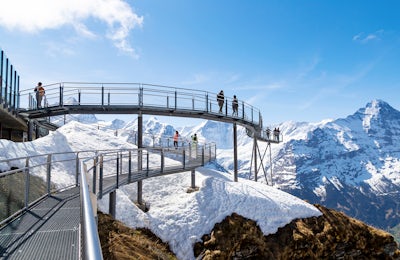
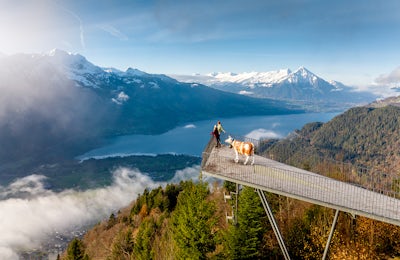
- Harder Kulm (Interlaken): often fully included—ideal for arrival-day orientation
- Rigi and Pilatus (Luzern area): classic pass-friendly peaks if you extend the trip
- Schilthorn region: commonly discounted rather than free—read the map legend for your exact year
Always read the legend on the official Swiss Travel System map PDF for your pass edition. “Free”, “discount”, and “private railway with separate fare” are three different animals.
Sketch four days: Zürich–Interlaken return, Jungfraujoch with 25% maths, Harder Kulm, a Brienz lake hop. If the sum of those point tickets under Half-Fare plus the Half-Fare card fee beats the pass price, you have your answer. If not, buy the pass and stop torturing yourself with counterfactuals.
Common mistakes that cost money or time
- Buying a full valley ticket you do not need: if the pass already covers the leg to Interlaken Ost, do not purchase a second “base” ticket out of habit.
- Forgetting seat reservations: the pass does not waive mandatory reservation rules on the Jungfrau Railway in peak season.
- Assuming children are magically free at 3,454 m: national child rules and mountain child tariffs interact; verify Junior Card and Swiss Family Card conditions.
- Treating Eurail as identical to Swiss Travel Pass: Interrail/Eurail reductions follow different tables by product generation—use the calculator for your exact pass number.
Luxury upsells: when to read the VIP page
If you are already committed to a premium hotel pace, glance at VIP and lounge-style bundles before you buy disjointed add-ons at full impulse pricing. Not every bundle beats à la carte, but some families like predictable seating and predictable queues.
Multi-day region strategy: Jungfrau Travel Pass
Guests staying a week often ride many lifts between Grindelwald, Wengen, and Mürren. The Jungfrau Travel Pass covers that lateral world with a separate priced connector to the summit. Sometimes the connector band approaches half off the cogwheel leg relative to rack—simulate it before you buy two incompatible products.
Purchase mechanics and reseller notes
Swiss Travel Passes are sold to non-residents with ID checks in some channels; digital delivery is normal. Jungfraujoch tickets can be bought at staffed desks or online; third-party resellers such as Headout may bundle convenience with their own refund windows. This site uses affiliate links where disclosed in the footer; your contract is always with the seller named on your receipt.
After purchase, add the journey to your calendar with buffer time for Swiss trains that still miss connections when a herd of cows debates level crossings—rare, but the Alps enjoy reminding humans who is in charge.
Eurail and Interrail: read your pass generation, not the headline
Interrail and Eurail products sell peace of mind across dozens of railways, but each mountain line negotiates its own reduction table. On the Jungfraujoch, the percentage you receive (if any) can differ from the Swiss Travel Pass’s clean “25% off the mountain ticket” story, and the handheld terminal reads the barcode on your pass profile, not your assumptions.
Before you stand in a queue at Interlaken Ost, open the official fare calculator, select your exact pass type and validity window, and print or save the screen where the mountain fare appears. That habit saves more money than scrolling Reddit threads from 2019.
Flex days, night travel, and “did I burn a pass day?” anxiety
Swiss Travel Pass Flex editions exist because real itineraries include rest days and bad-weather swaps. Each calendar day you choose as a pass day must cover every journey you take that day, including the approach sectors to the Jungfrau region. If you accidentally toggle the wrong date in an app, you can end up holding a valid mountain ticket on a day when your pass is asleep—inspectors do not award sympathy points.
Night trains into Switzerland can touch tariff edges: ownership of segments, supplements, and seat categories interact with pass validity at midnight boundaries. If your summit attempt sits the morning after an overnight arrival, verify which date counts for both the pass and the mountain reduction before you tap “pay”.
Altitude, insurance, and the unglamorous fine print
The Swiss Travel Pass solves access to many trains; it does not solve weather, altitude discomfort, or missed international connections. Travel insurance that explicitly covers high-mountain railways and cancellation for documented illness is worth comparing once, calmly, at home—not at 06:45 when fog sits on Interlaken and emotions run hot.
If a family member struggles with shortness of breath at the summit, the correct response is descent and medical assessment, not “pushing through” to justify the ticket price. The pass will still be there for gentler lake-level walks tomorrow.
Worked week: where the pass quietly pays rent
Picture a seven-night stay centred on Interlaken with three “big” days and four quieter days. Day one might be Harder Kulm plus a lakeside stroll—mostly pass-friendly and low stress. Day two could be a Zermatt or Luzern side trip on mainline metal where the pass removes ticket friction entirely. Day three is your Jungfraujoch attempt with seat reservations and an early breakfast.
On quieter days four through six, you might still use the pass for short BOB hoping between Interlaken Ost, Wilderswil, and Brienz if those segments appear as pass lines on your map edition—again, read the legend rather than guessing from memory. By day seven you are packing and buying chocolate, not buying another mountain ticket.
When you add the full-price equivalents of each included movement, the pass total often crosses breakeven without you noticing, because humans under-count “small” tickets psychologically while banks still charge francs. The Jungfraujoch line item is simply the loudest expense in that stack, not the only one that matters.