
What is the Jungfrau Travel Pass?
The Jungfrau Travel Pass—often discussed alongside the informal name “Jungfrau Railway pass”—is a consecutive-day product sold by Jungfrau Railways for leisure travel inside a defined map of lines and cableways around Interlaken, Grindelwald, Lauterbrunnen, Wengen, and Mürren. Instead of buying separate return tickets for every ridge day, you carry one barcode that authorises repeated trips on included segments for the printed number of days.
That simplicity is the real product: fewer queue visits, less mental arithmetic at breakfast, and the freedom to bail on a cloudy First afternoon and pivot to a boat on Lake Brienz without feeling you “wasted” a full-price cable ticket. The pass is not a ski pass; it does not replace winter sports lift products on pistes. It is transport and sightseeing mobility inside the Jungfrau Railways commercial network plus the BLS boat lines named in the official validity PDF.
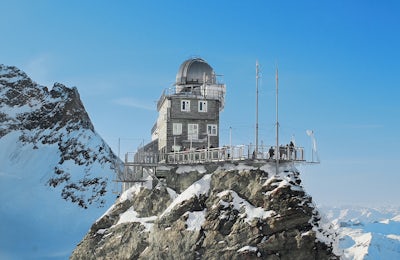
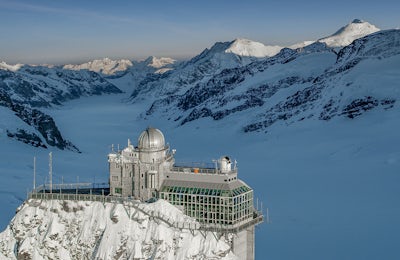
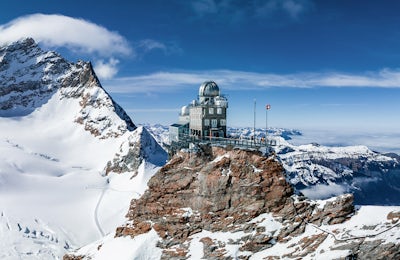
The headline that surprises first-time planners is that the Jungfraujoch summit station is not automatically “free” on the pass. You already own the expensive valley-to-Eigergletscher bundle through Kleine Scheidegg or via the Eiger Express routing on included segments, but the final cogwheel tunnel to 3,454 metres is priced as an add-on called a connecting ticket. In return, that add-on is heavily discounted versus a normal tourist return from the same point—commonly described as roughly half off—so the economics only make sense when you actually intend to go up.
Which railways and cableways are included?
Official lists evolve slightly with engineering closures, but the core story has been stable for years: the pass stitches together the Berner Oberland Railway between Interlaken Ost and the Grindelwald/Lauterbrunnen forks, the Wengernalp Railway between Lauterbrunnen or Grindelwald and Kleine Scheidegg, the modern tricable Eiger Express between Grindelwald Terminal and Eigergletscher, the Grindelwald–First gondola, both Männlichen cableways, the Harder Kulm funicular above Interlaken, the nostalgic Schynige Platte rack line, the Lauterbrunnen–Grütschalp–Mürren combination, BLS passenger boats on Thun and Brienz, and local Grindelwald bus lines printed in the map legend.
Photographers should read the map twice: “included” does not mean “best light every hour”. The Eiger Express saves time; the classic Wengernalp curve trades minutes for slow-motion views of the Eiger north wall. With a pass you can experiment on different days instead of locking one aesthetic choice into a single expensive ticket.
- Berner Oberland Railway (BOB) – Interlaken Ost to Grindelwald and Lauterbrunnen
- Wengernalp Railway (WAB) – Lauterbrunnen/Grindelwald toward Kleine Scheidegg
- Eiger Express – Grindelwald Terminal to Eigergletscher
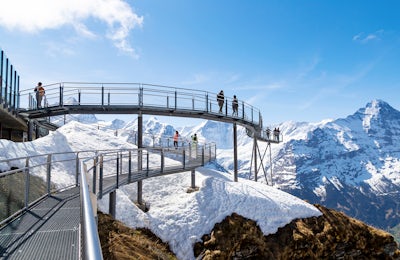
- Grindelwald–First – gondola plus walking access to cliff walks and hike heads
- Männlichen gondolas – from Grindelwald Terminal and from Wengen
- Harder Kulm funicular – Interlaken’s local panorama peak
- Schynige Platte Railway – historic rack line into alpine gardens
- Lauterbrunnen–Mürren – cableway and connecting railway as published
- BLS lake boats – Thunersee and Brienzersee on included routes
- GrindelwaldBus – local lines in the tariff note
The Jungfrau Railway itself between Eigergletscher and Jungfraujoch is not fully included in the base pass. You need the additional connecting ticket for that summit segment. The stretch from Kleine Scheidegg toward Eigergletscher is included as part of the published network—confusing on first read, expensive if you guess wrong at a gate.
Jungfrau Travel Pass price table (2026 planning snapshot)
The table below mirrors the adult, reduced, and child columns commonly shown for the standard Jungfrau Travel Pass ladder from three to eight consecutive days. Reduced fares assume you hold an eligible national discount such as Swiss Travel Pass, Half-Fare Card, or GA according to the official combination rules—never assume your foreign pass qualifies until the fare engine agrees.
| Validity | Adults | Reduced* | Children (6–15) |
|---|---|---|---|
| 3 days | CHF 210 | CHF 165 | CHF 30 |
| 4 days | CHF 235 | CHF 180 | CHF 30 |
| 5 days | CHF 270 | CHF 210 | CHF 30 |
| 6 days | CHF 290 | CHF 225 | CHF 30 |
| 7 days | CHF 310 | CHF 240 | CHF 30 |
| 8 days | CHF 330 | CHF 255 | CHF 30 |
* Reduction with Swiss Travel Pass, Half-Fare Card, or GA per jungfrau.ch. Source: jungfrau.ch.
Jungfraujoch connecting ticket for pass holders
The connecting ticket is the small second barcode that turns a regional mobility pass into a summit day. It covers the tunnel cogwheel segment between Eigergletscher and Jungfraujoch and back, which is deliberately excluded from the unlimited bundle because demand, maintenance, and seat control on that railway behave like a separate premium product.
- Typical public prices: CHF 63 in the lower season band (often quoted for November–April) and CHF 89 in the higher season band (often quoted for May–October)
- Saving versus full fare: broadly in the ~50% range against the comparable normal connecting leg—simulate your exact origin in the cart
- Same-day logic: designed to be used on a day your Travel Pass is already valid
- Seat reservation: from May through October, Jungfrau Railways treats timed seat reservations on the Jungfrau Railway as mandatory for ordinary travel; budget CHF 10 per person in that window
If you are comparing against a bare Jungfraujoch return from Interlaken, read our full English price guide first. The pass replaces many valley legs you would otherwise buy piecemeal; the connecting ticket replaces only the summit cogwheel bundle on top.
Who should buy the Jungfrau Travel Pass?
Start with nights, not slogans. The pass is priced on consecutive calendar days. A five-night stay with three heavy lift days and two rainy rest days still consumes eight calendar days if you activate early—so match pass length to the span you will realistically move around the mountains, not to “nights in a hotel bed”.
The pass wins when you stack experiences that each carry meaningful list prices: Grindelwald–First return, Schynige Platte, Harder Kulm, a boat crossing, Männlichen ridge walking, and perhaps two different approaches to Kleine Scheidegg for photography. It loses when you only want one iconic summit day and otherwise plan lakeside cycling in Thun where the pass map does not help.
The pass tends to pay off when…
- You stay at least three days inside the validity map and move by train or cable most days
- You want spontaneity—weather windows in the Alps reward flexible routing
- You plan Jungfraujoch and at least one other expensive cable day
- You travel with children aged 6–15, because the flat CHF 30 child pass can undercut repeated child returns if you move often
Stick to single tickets when…
- You only have one or two days total in the region
- Your only goal is Jungfraujoch from a single valley station—compare the published return rows
- You already hold another national pass whose combination rules overlap awkwardly—read the Swiss Travel Pass chapter on the official site and our Swiss Travel Pass guide
- Weather volatility is extreme and you refuse to commit to consecutive days
A three-day adult pass at CHF 210 plus a low-season connecting ticket near CHF 63 lands around CHF 273 all-in for heavy regional mobility plus one summit day. Against separate adult tickets for Jungfraujoch from a mid-valley point, Grindelwald–First, and Harder Kulm, many DIY spreadsheets show a modest saving—but your origin station moves the numbers. Always rebuild the example in the official shop before you treat blog maths as money in the bank.
Practical tips from repeated visits
1. Treat the QR code like a boarding pass
The pass arrives digitally. Screenshot it, save offline copies for each phone in the group, and keep brightness high enough for scanners in bright snow glare. Staff are efficient; fumbling at the gate is the wrong place to discover your mail client did not sync.
2. Extension days exist—but buy them deliberately
If you mis-planned length, Jungfrau Railways sells extension days at staffed points for a published surcharge (commonly quoted around CHF 45 for adults and CHF 35 reduced, with children extending free in official notes). That is cheaper than panic-buying separate returns for every leg, but still more expensive than choosing the right ladder up front.
3. Consecutive days are strict
A four-day pass activated on Monday expires Thursday night, not “any four days inside two weeks”. If you need gaps, you are usually outside the product design and should return to point-to-point tickets or discuss a different national pass strategy.
4. Family cards do not always stack the way tourists expect
SBB Junior Cards and some children’s co-travel constructs do not combine with the Jungfrau Travel Pass the way they combine with normal domestic tickets. On this pass, children 6–15 pay the flat CHF 30 for the pass itself according to the public table. If you have one child and minimal movement, run both scenarios.
5. Retail discount on the mountain
Official marketing sometimes lists a percentage discount in Top of Europe shops when presenting a valid pass. Treat it as a nice extra, not a reason to buy the pass—unless you genuinely planned souvenir spend in the first place.
How the Jungfrau Travel Pass interacts with other products
Visitors often arrive with a Swiss Travel Pass already paid. That national pass covers wide parts of the ride toward Interlaken but does not silently “become” a Jungfrau Travel Pass at the mountain foot. You still choose between point-to-point mountain tickets with the published Swiss Travel Pass reduction on the Jungfraujoch leg (see prices) or buying the regional Jungfrau Travel Pass if you will zig-zag across lifts for several days.
The Good Morning ticket is a different animal: time-boxed discounting on early departures with strict return deadlines. It is not a drop-in replacement for a multi-day regional pass, and official combination rules explicitly forbid stacking with several reductions including Swiss Travel Pass—read that page before you fantasise about “Good Morning plus Travel Pass plus Half-Fare” triple dips.
Rail pass tourists from outside Switzerland should also verify whether their pass is Swiss Travel Pass, Half-Fare Card, Eurail, or Interrail—each has a different checkbox in the fare engine. Forum answers from 2019 rarely match 2026 fare trees.
Sample four-day itinerary that actually uses the pass
Assume you sleep in Grindelwald and want a balanced mix of altitude, ridge walking, and water. This pattern is deliberately greedy on included infrastructure so you see where the pass earns its keep.
Day 1 – Jungfraujoch via Eiger Express
Start early, book your mandatory summer seat reservation if travelling May–October, and ascend via Grindelwald Terminal for the shortest chain. Spend the morning at Sphinx level when queues are shorter, then descend via Kleine Scheidegg if you want classic cogwheel photos on the way down—routing is usually flexible within purchased validity, but confirm on your PDF.
Day 2 – Grindelwald–First adventure stack
Use the included gondola, walk the First Cliff Walk, and if conditions allow, hike toward Bachalpsee. Paid adrenaline rides like the First Glider are not included; budget separately.
Day 3 – Schynige Platte morning, Harder Kulm evening
Pair slow historic railway aesthetics with a sunset funicular above Interlaken. This day burns kilometres horizontally; the pass removes the temptation to skip Harder Kulm “because we already spent too much yesterday”.
Day 4 – Boat plus Mürren
Take a Brienzersee crossing toward a mid-lake stop, then climb back into the cliffs via Lauterbrunnen and continue to car-free Mürren for Eiger-facing coffee. You end the trip having used boats, rack railways, cableways, and buses—exactly the mobility bundle the pass is priced to reward.
Unlimited Jungfrau Pass (season card) – when to ignore the Travel Pass entirely
Frequent visitors and second-home owners sometimes step up to the Unlimited Jungfrau Pass, a seasonal product that includes unlimited travel including the Jungfraujoch leg without a separate connecting ticket. Public marketing quotes entry levels such as CHF 449 for a summer season band and CHF 399 for a winter band, but those products change names and fences more often than the holiday pass ladder.
If you are in the region for several weeks and treat the mountains like a commute, open the Unlimited tab on the official site instead of buying eight-day Travel Passes back-to-back.
Weather, safety, and crowd realism
A pass does not grant immunity from valley rain or summit white-outs. Webcams at Eigergletscher remain your best friend. If the Jungfraujoch plateau is in cloud but First is above a sea of stratus, swap days without mercy—consecutive validity makes “wasting” a sunny morning on a low hike feel worse than it should.
Altitude symptoms can appear even in fit travellers. Headache, nausea, or disproportionate breathlessness mean descend, hydrate, and do not “prove toughness” at 3,454 metres. The pass will still be there tomorrow for a lower walk toward Männlichen.
Summer Saturdays concentrate tour coaches and independent travellers on the same cogwheel departures. Reservations are not optional snobbery; they are load management. Read the mandatory window dates on jungfrau.ch alongside this article.
Booking channels and cancellation realism
You can buy from Jungfrau Railways directly or through partner marketplaces. Third-party sellers sometimes offer free cancellation windows up to 24 hours before travel; official direct sales are often stricter on refunds. Read the basket conditions every time—2026 is not the year to assume “Covid-era flexibility” still exists.
Affiliate links and widgets on independent guides (including this site) may earn a commission when you book. That does not change the underlying tariff set by the railway.
Closing checklist before you pay
Confirm consecutive dates against your hotel nights. Confirm whether you truly need the summit or only ridge photography—some guests happily skip the tunnel entirely. Confirm seat reservation needs for your month. Confirm child reduction logic for your family structure. Then simulate one alternative basket with point-to-point tickets from the same origins using the tables on our prices page. If the gap is tiny, choose whichever reduces stress; travel is not only spreadsheet optimisation.
For the fast lift story from Grindelwald Terminal, keep the Eiger Express guide open in another tab while you plan times. For early-bird discounting, cross-read the Good Morning ticket page. For nationwide rail strategy, finish with the Swiss Travel Pass article. Together those pages bracket the Jungfrau Travel Pass without duplicating the official tariff office.