
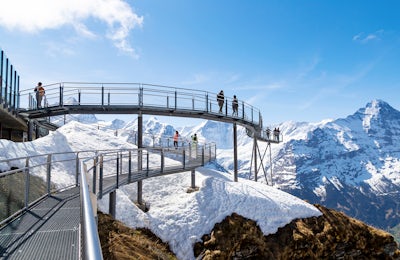
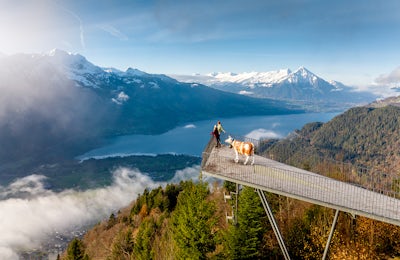
What “Top of Europe” actually means on the ground
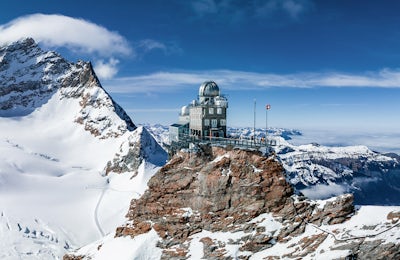
The Jungfraujoch is a ridge col in the Bernese Alps, not a single “building”. What you buy with a standard return ticket is the right to travel on the Jungfrau Railway network between your chosen valley points and the summit complex, then use the visitor attractions that are included with that ticket—think Sphinx viewing platform, Ice Palace walk, Alpine Sensation exhibition, and the outdoor snow plateau.
Official marketing calls the experience “Top of Europe”. Geographically you are not on Europe’s highest peak—that honour belongs to mountains in the Caucasus—but you are on the continent’s highest railway station you can reach with a normal passenger train, at 3,454 m. That distinction matters for expectations: you are visiting infrastructure and a curated visitor centre as much as “wilderness”.
What you should plan for at the summit
Even on a July heatwave day in Interlaken, the air at 3,454 m can sit around or below freezing when wind picks up. Pack a windproof layer, gloves, and sunglasses with real UV protection—snow glare is unforgiving.
Most first‑time visitors budget two to three hours and end up rushing. If you want photos without elbows in frame, the “golden hour” is early morning (this is where the Good Morning ticket story starts) or late afternoon when many coach groups have already turned downhill.
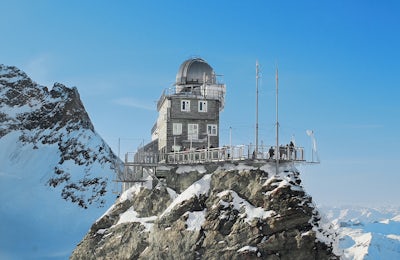
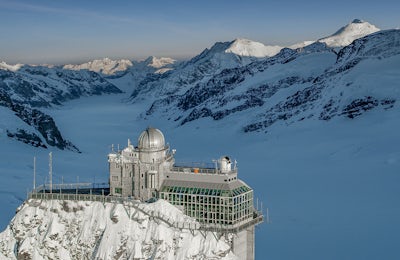
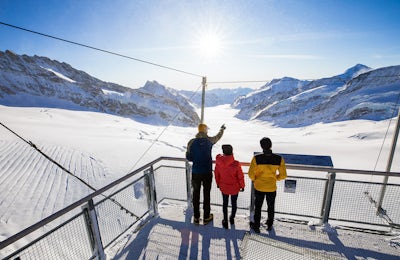
- Sphinx terrace (3,571 m) – Fast lift, wide panorama over the Aletsch Glacier when the sky is clear.
- Ice Palace – Constant sub‑zero temperatures; fun for families, tight for claustrophobia.
- Snow Fun / plateau – Guaranteed snow surface year‑round; activities vary by season.
- Lindt “Chocolate Heaven” – Retail experience; skip if you are short on time.
On busy days I send people up first to the Sphinx queue, then down into the Ice Palace while everyone else is still queuing for selfies. It is not a “secret entrance”—just a calmer sequence.
Fast vs classic route: why the Eiger Express changed the game
Since December 2020 the tricable Eiger Express lifts you from Grindelwald Terminal to Eigergletscher in about fifteen minutes. Jungfrau Railways quotes roughly 47 minutes saved versus the older scenic routing via Kleine Scheidegg for many itineraries—exact door‑to‑door savings depend on connections.
For the ride down, many photographers still prefer the cogwheel line towards Kleine Scheidegg for slower, wider angles on the Eiger north face. Your return ticket normally allows you to mix routes as long as you stay within the purchased validity area—double‑check the map printed on your ticket or PDF.
Ticket types you will actually choose between
Ignore buzzwords for a second. Most visitors end up picking one of these four patterns: standard return, Good Morning (time‑boxed discount), Swiss Travel Pass reduction, or a multi‑day Jungfrau Travel Pass plus the discounted “connecting” leg to the summit. The dedicated English pages on this site walk through the maths without pretending we are the tariff office.
“Secret” entry—what exists, what does not
There is no hidden side gate that skips the seat‑control queue on busy days. What does exist is routing choice: the Eiger Express corridor tends to feel faster because you change vehicles fewer times; the Kleine Scheidegg corridor trades minutes for classic cogwheel scenery. Groups should still book named seats in mandatory periods—group tickets do not magically float past capacity limits.
Combo tours versus DIY tickets
Packaged day trips from Interlaken or Lucerne often bundle a guide, guaranteed meeting point, and sometimes a boat or cogwheel add‑on. They cost more than bare tickets but remove language friction and missed‑connection stress. DIY suits travellers who already hold a Swiss Travel Pass, enjoy reading timetables, and can tolerate self‑service refunds if the weather collapses.
Timing for photographers
Hard light on fresh snow blows highlights on phone sensors. Wait until the sun lifts about 15° above the Mönch ridge, then expose for the glacier ice—your foreground snow will stay textured. Tripods are allowed in most indoor areas; outside, wind gusts above 40 km/h are common—carry weight, not flimsy selfie sticks.
City passes and regional cards
Interlaken guest cards sometimes bundle local bus rides; they do not replace the Jungfraujoch mountain fare. The Jungfrau Travel Pass covers many cableways but still needs the summit connector—read the validity PDF once, highlight your dates, screenshot the map layer offline.
Zurich or Geneva inbound—sample chain
From Zürich HB, frequent IC trains reach Interlaken Ost in roughly two hours with one change at Bern in many connections. Add the Berner Oberland Railway leg to Grindelwald Terminal, then the Eiger Express, then the Jungfrau Railway. Total block time from Zürich to Sphinx level is often quoted around three and a half to four hours—add buffer if you have a non‑flexible seat reservation.
Parking reality for drivers
Official visitor guidance points day trippers to Park+Ride Matten near Interlaken when valley car parks fill. Live parking dashboards linked from jungfrau.ch update faster than any blog—check them the morning you drive.
Connectivity and cash
Summit Wi‑Fi is usable for messaging; do not plan a video call unless you enjoy buffering as a hobby. CHF cash still helps in vending corners; most tills take major cards and contactless.
When we refuse to invent numbers
If a price or percentage is not on the official tariff sheet, we do not fabricate it. Special promotional fares (for example regional “Top Ticket” campaigns) appear and vanish—when we mention examples, we date‑stamp them and link upstream.