
The Sphinx Observatory: science meets panorama
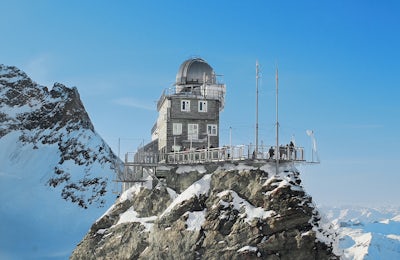
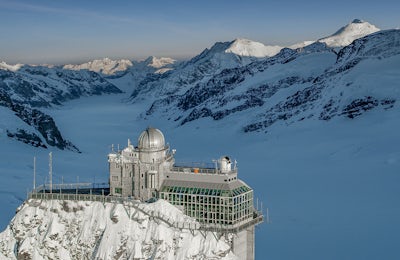
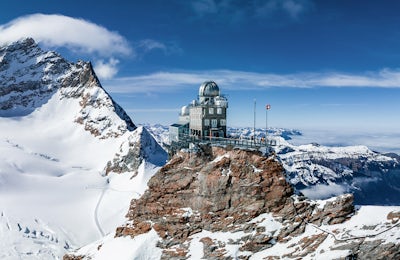
The Sphinx is more than a selfie deck. It is an internationally recognised high-altitude research site, an architectural landmark perched on a rocky prow, and—most famously for visitors—the place where the Bernese Alps reveal themselves in three dimensions. The name echoes the rock silhouette: from certain angles the outcrop resembles a reclining sphinx, a mnemonic that stuck when the station was developed in the early twentieth century.
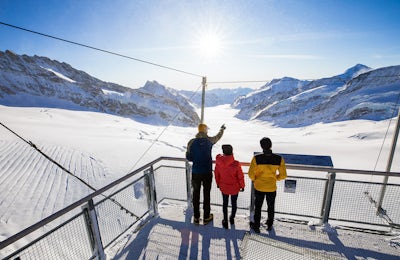
For tourists, the emotional peak is the open terrace at 3,571 metres above sea level, reached by a lift that clears more than a hundred vertical metres in a few dozen seconds. On clear days the Aletsch Glacier reads like a frozen river draining the highest summits of the Bernese Oberland; when the air is stable you can trace ridgelines toward the Swiss Plateau and, in exceptional visibility, pick out distant ranges that belong to neighbouring countries.
Because the Sphinx experience is bundled into the standard Jungfraujoch visitor circuit, budgeting is simple: you do not purchase a second ticket for the terrace itself. Your real constraints are weather, acclimatisation, and time—most guests underestimate how long photography, chocolate shopping, and the Ice Palace add to a “quick” summit visit.
The view: what you can see
Atmospheric physics cap sightlines most days far below the theoretical maximum, but when synoptic charts align you can read distance like a map unfolded at your feet. Typical interpretation boards highlight:
- Aletsch Glacier: the longest glacier in the Alps at roughly twenty-three kilometres, inscribed as UNESCO World Heritage within the Swiss Alps Jungfrau–Aletsch property
- Four-thousand-metre peaks: Eiger, Mönch, and Jungfrau dominate the immediate crown; fin-shaped shadows move quickly across ice when cumulus builds
- Swiss Plateau: Bern and the midland lakes appear as silver ribbons under clean northerly flows
- Vosges (France): a faint blue ridge on the finest summer days
- Black Forest (Germany): occasionally visible when haze is unusually low
- Monte Rosa massif (Italy): strong presence to the south when southern air is clear
Photographers should plan for polarised glare off snow and for rapid contrast changes when clouds stream through the col. A compact tripod may be restricted in crowds; a neck strap and gloves you can operate with matter more than extra lenses.
Morning light is softer and shadows are longer across séracs. After mid-morning, convective clouds often bubble along crests even when valleys are sunny. The terrace’s glazed parapets allow panoramic sweeps if you control reflections by shading the lens gently—never scrape fittings.
The research station
Beneath the iconic dome lies a working scientific environment, not a classical public observatory with eyepieces for tourists. Since the 1930s, instruments here have contributed to long climate and atmospheric records that researchers worldwide compare against lowland stations. That continuity matters: a fifty-year ozone series is worth more than fifty one-year snapshots.
Research themes commonly associated with the site
- Atmospheric chemistry: trace gases, aerosols, and baseline pollution transport into the free troposphere
- Climate variables: temperature trends, precipitation phase, UV dosage at altitude
- Glaciology: Aletsch geometry change read against satellite and field programmes
- Solar and cosmic-ray physics: clean windows for radiation studies when equipment campaigns run
- Human physiology: controlled studies on acclimatisation and hypoxia response
The facility participates in international networks linking other high stations—comparability of instruments and calibration protocols is how science scales from one mountain to planetary models.
What visitors actually access
The instrument dome is not a self-guided museum. Public interpretation happens on the terrace and in adjacent visitor spaces through panels and seasonal exhibits. Respect ropes and staff instructions; if a door is unmarked, assume it is operational, not scenic.
History in one breath
Building on this spur was audacious interwar engineering: materials and crews moved through weather windows that modern project managers would still wince at. The 1937 inauguration marked both a railway triumph and a science commitment—Switzerland chose to keep measuring when tourists went home.
The mythic name stuck because geology already suggested it. Marketing later wrapped the science in a story visitors could repeat on the train back to Interlaken. Neither angle cancels the other: the Sphinx is simultaneously a serious instrument field and a cultural symbol of Swiss altitude.
Practical visitor information
How to reach the Sphinx terrace
- Travel on the Jungfrau Railway to Jungfraujoch station (3,454 m)
- Follow interior signage toward “Sphinx”
- Ride the express lift (included with a valid summit ticket)
- Step onto the terrace at 3,571 m and adjust clothing before you shoot
Clothing and gear
The terrace is outdoors even when the valley is t-shirt weather. Wind chill and reflected UV are the silent risks. Pack a windproof layer, gloves, a hat, quality sunglasses, and high-SPF lip balm. Smartphone batteries die faster in cold—carry a small power bank in an inside pocket.
Altitude behaviour
Air pressure here is materially lower than at sea level; some guests feel light-headed within minutes. Move calmly, hydrate sensibly with water rather than only espresso, and descend to the main station if headache or nausea escalates rather than “pushing through” for another photo round.
Budget fifteen quiet minutes after the first burst of pictures. Most groups rush the lift cycle; if you wait one weather pulse, you often hear ice crackle and wind harmonics on guy wires—a rare sensory moment that does not show up on a shot list.
Other Jungfraujoch highlights after the Sphinx
Sequence your day so the Sphinx happens when cloud bases are highest, then explore indoor attractions if whiteout closes the deck:
- Ice Palace: sculpted corridors inside the glacier body—slow, sure footsteps
- Alpine Sensation: multimedia history of the railway and region
- Snow Fun Plateau: seasonal activities on snow
- Lindt Swiss Chocolate Heaven: retail theatre with tasting notes
- Mönchsjoch Hut trail: summer glacier approach for equipped hikers only—crevasse risk is real
Pair this page with our price overview for seat reservations and pass reductions, and with Eiger Express if you are staging from Grindelwald Terminal.
Crowding, etiquette, and a better visitor flow
The Sphinx terrace is a finite ring in three dimensions: only so many elbows fit along the parapet when three coach groups release at once. If you can, visit the terrace in passes—first rotation for wide establishing shots, a warm-up coffee indoors while a cloud bank crosses, then a second rotation when the light angle changes. That pattern beats standing in the same corner for forty minutes while your fingers numb.
Keep voices moderated; sound carries oddly in wind. Hold hats and selfie sticks firmly—retrieving dropped items below safety barriers is not a DIY project. Tripods can create trip hazards; if staff ask you to collapse gear, comply promptly.
Accessibility: lifts serve the main public levels, but outdoor decking can be slick with rime ice even in July. Footwear should be winter-serious, not fashion trainers. If you use mobility aids, confirm current step-free routing with Jungfrau guest services before travel day; maintenance sometimes reroutes lifts.
Science communication for curious visitors
You do not need a PhD to appreciate why instruments live here. Many atmospheric pollutants mix vertically in the lowest kilometres of the troposphere; a high clean-air site helps separate local valley haze from background concentrations. Snow and ice surfaces also modify sunlight reflectance—albedo shifts measured here feed glacier melt models downstream.
When you read panel text about “global networks”, it is not hyperbole: calibration ships, mountain stations, ships, and satellites are stitched into one conversation about climate. Your ticket indirectly supports that infrastructure because political support for science stations stays stronger when the public actually visits and understands the mission.
Photography logistics beyond the terrace
Serious photographers sometimes bracket exposures for HDR panoramas; remember that people move, so merge frames ethically—do not ghost-remove strangers who were legally in public space unless you have model releases for commercial use. For weddings, hire photographers who already know the permit pathway; the terrace is not a private studio.
Night sky opportunities are limited for casual tourists because most visitors descend before astronomical twilight. If you are part of a research visitor programme, different rules may apply—do not assume public night access from blog anecdotes.