
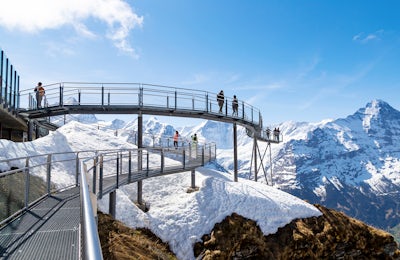
What “Top of Europe” actually means on the ground
“Top of Europe” is the visitor-facing brand for the Jungfraujoch experience: the railway station inside the mountain at 3454 metres, the tunnels and lifts that stitch viewing platforms together, and the commercial circuit of restaurants, shops, and chocolate marketing that finances winter snow clearing at altitude. It is not a separate legal railway company; operationally you still ride Jungfrau Railways infrastructure, buy Jungfrau Railways tariffs (directly or via resellers), and accept Swiss transport-law conditions when you board.
Why the superlative sticks in English brochures is simple cartography: no other normal-schedule passenger railway in Europe routinely serves a higher inside-the-rock platform under everyday tourism loads. Mountaineers will correctly note higher huts and cable car tops elsewhere; the brand is about railway heritage plus public access, not about winning an argument with every Swiss guidebook footnote.
Your ticket therefore buys two intertwined things: safe transport through the Eiger and Mönch massif on a line first conceived when Kaiser Wilhelm-era engineers still used slide rules, and admission-style circulation through indoor and outdoor attractions once you arrive. Understanding that split helps when you compare prices: you are not only renting fifteen minutes of Eiger Express glass; you are also paying for tunnel ventilation, snow service on the plateau, and the fixed costs of keeping a station alive above the Aletsch glacial system year-round.
Highlights included in the standard visitor ticket
The exact list can be marketing-polished season by season, but experienced travellers expect the following anchors to remain stable. Always read the conditions printed on your specific barcode because reseller bundles sometimes exclude optional experiences.
1. Sphinx observation deck (~3571 m)
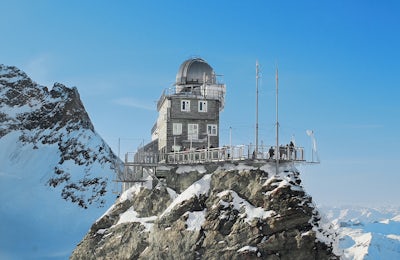
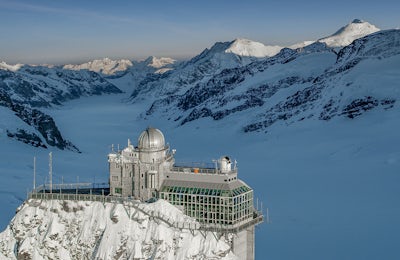
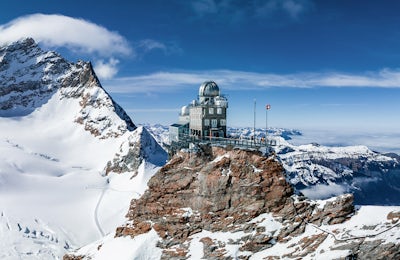
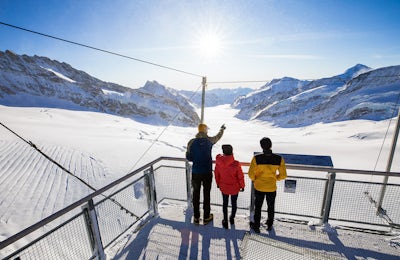
A fast lift punches through rock to an exterior terrace perched above the station complex. On a transparent day the Aletsch Glacier reads like a frozen highway toward the Valais; you may pick out distant peaks in France, Germany, or Italy depending on humidity and haze. The deck is narrow when cruise-shore groups arrive in waves, so patience and polite queuing matter. Sunscreen is not optional: ultraviolet intensity at this elevation burns skin faster than most Northern European visitors intuit.
2. Ice Palace
Carved corridors inside glacial ice display sculptures lit for drama. Air temperatures sit below freezing year-round; a packable insulated layer beats borrowing space blankets from strangers. Footing is generally managed with mats and subtle lighting, but still assume slippery patches if your boots are city-smooth.
3. Alpine Sensation walkway
A themed passage mixes historical panels, sound design, and memorabilia from a century of railway construction. It is more museum than thrill ride, which makes it underrated for families whose children need a break from bright sun on the plateau.
4. Snow Fun plateau
Outdoor snow experiences operate in summer when conditions allow; winter visitors may find different activity mixes. Tubing and beginner-friendly slides photograph well for social media, but they are still real mountain weather: wind chill can turn a postcard moment into shivering within minutes if you skipped gloves.
5. Lindt Swiss Chocolate Heaven
A high-altitude boutique blending tasting stations with retail psychology. Budget-conscious travellers sometimes buy commemorative bars here anyway because the story value outweighs a few francs of markup versus Interlaken supermarkets.
The Mönchsjochhütte sits roughly forty-five minutes on foot from the tourist core when summer routes are open and crevasse risk is managed for ordinary walkers. It is a genuine high-alpine hut meal rather than a shopping-mall snack—carry cash, reserve if you plan dinner or sleepers, and turn back if weather closes the marked path.
History without hagiography
Adolf Guyer-Zeller’s concession in the 1890s launched one of Switzerland’s most audacious civil projects: kilometres of tunnel driven under the Eiger’s intimidating north wall, worker camps in lethal conditions, and political fights over who would finance tourist demand that did not yet exist. The line reached the Jungfraujoch station in 1912 after years of incremental headings, compressed-air drilling, and human cost that modern exhibits do not always foreground bluntly enough for sensitive visitors.
Today’s operation is therefore both heritage railway and high-throughput conveyor of global tourism. UNESCO World Heritage listing for the Swiss Alps Jungfrau–Aletsch region contextualises the landscape you see from the Sphinx; it does not magically silence helicopters on neighbouring valleys or erase overtourism debates in Grindelwald parking lots. Responsible travel here means realistic expectations: you will share space with thousands of other ticket holders on peak Saturdays in July.
The Eiger Express as modern feeder
Since 2020 the tricable cableway from Grindelwald Terminal has shortened valley-to-Eigergletscher travel dramatically, which reshaped how day-trippers from Zürich or Basel schedule connections. The Express does not replace the cogwheel climb through the tunnel; it accelerates the approach. Read our dedicated page for ticket boundaries so you do not confuse cableway-only fares with full summit products.
Practical visitor information
Hours and seasonality
The Jungfraujoch markets year-round access, and operators aim for daily service, but alpine storms, wind on the aerial ropeways feeding the railway, or maintenance windows can still force partial closures. First and last train times move with season; never plan an international tight connection on the same calendar day as your summit ticket without reading the live timetable the same morning.
Altitude, temperature, and health
Even fit adults sometimes notice shortness of breath climbing stairs at 3454 m. Move calmly, hydrate sensibly without over-drinking to the point of hyponatraemia, and descend if persistent headache or nausea appears. Children can adapt quickly but tire faster; schedule rest stops inside heated areas. Temperatures can sit below freezing on the plateau while Interlaken swelters; layer like a ski day even in August.
Where to eat on the summit
Self-service Aletsch appeals to families needing speed; Crystal targets à-la-carte diners celebrating anniversaries; Bollywood offers spice-forward menus for guests tired of cheese-heavy alpine fare; lounges sell drinks and snacks at altitude-appropriate prices. None of these are mandatory purchases—you may pack modest snacks—but respect litter rules and crowded seating etiquette.
Top of Europe ticket options and pass maths
The table below rounds representative 2026-style numbers from our public overview pages. Swiss Travel Pass holders do not ride free to the summit; they buy a reduced ticket at twenty-five percent off the published fare band, then add mandatory seat reservations in the May–October control period. Good Morning products reward strict early departures with about twenty percent off when all conditions are satisfied. Jungfrau Travel Pass holders ride many regional lifts freely but still purchase a discounted “connecting” ticket for the final cogwheel tunnel segment, with seasonal bands near CHF 63 versus CHF 89 in official materials.
| Ticket type | Illustrative price | What to verify |
|---|---|---|
| Standard adult return (Grindelwald Terminal routing) | CHF 100.60 | Official calculator + seat fee if required |
| Good Morning (when eligible) | CHF 80.48 | Time windows and combination rules |
| With Swiss Travel Pass (−25%) | CHF 75.45 | Based on CHF 100.60 base; confirm live |
| Jungfrau Travel Pass (3-day example) | from CHF 210 region pass | Plus connecting ticket; simulate basket |
For the full matrix of valley origins, child fares, and seat reservation mechanics, open our Jungfraujoch prices guide in a second tab and work row by row. If you are deciding between a standalone summit day and a multi-day regional pass, the Jungfrau Travel Pass article compares break-even hiking patterns without pretending to be your personal accountant.
Booking channels: official versus resellers
Buying on jungfrau.ch maximises alignment with live seat inventory and Swiss-law transport receipts. Resellers such as Headout may bundle cancellation flexibility or mobile-wallet convenience; they also introduce an extra contractual layer for refunds. Read who operates customer service if your train is cancelled for wind while you are still in Interlaken.
Crowds, photography ethics, and time budgeting
Allocate three to four hours on the summit if you want every indoor exhibit, a relaxed meal, and a plateau wander without sprinting. Photographers chasing empty Sphinx rails should target first ascents midweek outside school holidays; Saturday midday is simply physics—more bodies than railing length.
Drones are broadly unwelcome across Swiss transport infrastructure without explicit permits. Selfie sticks are not banned universally but become hazards in packed lift queues; common sense wins. Tripods indoors may be restricted when corridors narrow for fire egress.
Winter versus summer framing
Summer sells green valleys contrasted with white plateau snow; winter sells crystalline cold and shorter days. Operational risk shifts accordingly: shorter daylight margins in December mean you should not dawdle past the last advertised descent, while July heat increases sunburn risk faster than hypothermia. The “Top of Europe” brand stays constant; your packing list should not.
In closing, treat “Top of Europe” as a useful shorthand for a dense stack of engineering, nature, and commerce. Buy the ticket product that matches your actual route and pass holdings, reserve seats when the calendar demands it, watch webcams instead of stubbornly burning a peak fare in zero visibility, and remember that the highest compliment you can pay the place is to descend safely with your litter still in your pocket.