
Jungfraujoch ticket prices: the full overview
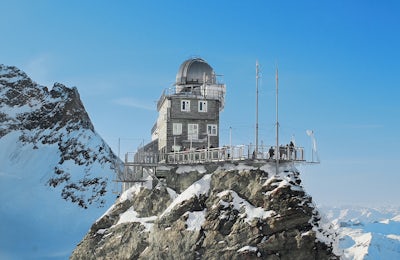
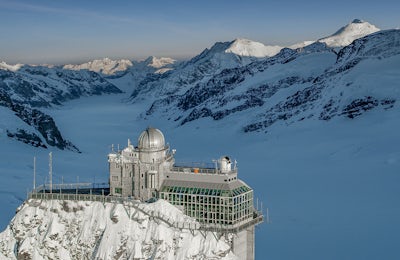
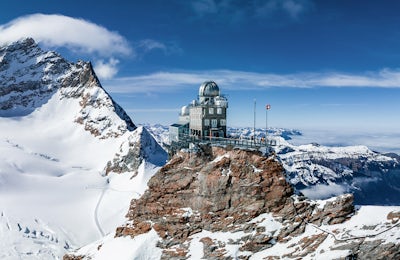
Planning a Jungfraujoch visit is easier when you treat the mountain ticket like what it is: a priced bundle of railway and cableway segments that gets you to Europe’s highest normal passenger railway station at 3,454 metres, plus access to the visitor circuit marketed as “Top of Europe”. The headline numbers move with the tariff year, but the structure stays the same: where you join the network, which reductions you hold, and whether you travel in a period when seat control is strict.
This page translates the 2026 public tariff snapshot into plain English. It is not a checkout. Always confirm the basket on jungfrau.ch (or with the reseller you pay) on the day you book—currency display, refund windows, and product combinations can differ between channels.
If you are comparing “cheap” versus “comfortable”, start with two honest facts. First, the Jungfrau Railway is expensive because it is a century-long engineering line through the Eiger and Mönch, maintained for daily passenger service in an extreme climate. Second, demand on blue-sky Saturdays in July and August routinely exceeds comfortable capacity, which is why Jungfrau Railways enforces timed seat reservations in the busiest months.
Visitors from the UK, North America, and Asia often anchor their mental budget on Interlaken Ost because that is where long-distance trains arrive. Locals and repeat guests frequently stage from Grindelwald Terminal instead, shaving more than CHF 130 off the adult return column while accepting a shorter but still spectacular final climb. Neither choice is “wrong”; they simply price different lengths of owned infrastructure and different valley bus or cogwheel segments.
When you read Swiss forums in translation, remember that “Halbtax” and “GA” comments assume Swiss residency habits. Tourists more often hold a Swiss Travel Pass or a Half-Fare Card bought for a holiday window. The displayed adult table is therefore your neutral baseline before any pass math.
How return pricing works in practice
A standard adult return is priced from your chosen valley origin to the summit station and back on the same ticket validity. The table below lists the classic origins visitors use when they self-plan from Interlaken, Grindelwald, Lauterbrunnen, or Wengen. “Half-Fare” (Halbtax) holders pay half of the adult column on many domestic legs; the Swiss Travel Pass applies a fixed 25 percent reduction on the Jungfraujoch ticket rather than making the mountain leg free.
Children’s rules deserve a careful read because Swiss family products can change the headline CHF 20 flat fare. If you are travelling with juniors, check whether a Junior Card or children’s co-travel pass applies before you assume the table is your final price.
Return validity is usually same-day oriented for standard leisure tickets, but exact conditions print on your PDF or card receipt. If you plan a lateral hike from Eigergletscher or an overnight stop in the Jungfrau region, stop and verify whether your fare allows break-of-journey or whether you need a multi-day product instead.
Return prices (adult snapshot, 2026)
| Starting point | Adults | With Half-Fare | Children (6–15) |
|---|---|---|---|
| Grindelwald Terminal | CHF 100.60 | CHF 50.30 | CHF 20 |
| Grindelwald station | CHF 128.80 | CHF 64.40 | CHF 20 |
| Lauterbrunnen | CHF 152.40 | CHF 76.20 | CHF 20 |
| Wengen | CHF 134.40 | CHF 67.20 | CHF 20 |
| Interlaken Ost | CHF 234.80 | CHF 117.40 | CHF 20 |
Figures follow the public overview on jungfrau.ch. Last cross-check: April 2026.
The gap between CHF 100.60 from Grindelwald Terminal and CHF 234.80 from Interlaken Ost is not a marketing trick. It reflects genuine extra track: BOB services through the valley, the climb toward either Lauterbrunnen or Grindelwald, and the cableway or cogwheel hops that stitch the network together. Photographers sometimes buy the longer ticket one way and combine regional passes on other days; spreadsheet heroes model three days of lifts against a Jungfrau Travel Pass before they touch “purchase”.
Wengen and Lauterbrunnen rows matter if you stay on the classic Lauterbrunnen valley floor or in a car-free Wengen hotel. The Wengen price sits between Grindelwald village and Lauterbrunnen because of how the Wengernalp cogwheel shortcuts vertical gain. If your luggage is heavy, price is only one variable—connection comfort and step-free routing may steer you toward Grindelwald Terminal even when the table nudges you toward Wengen on paper.
Seat reservation: CHF 10, mandatory May–October 2026
From 1 May to 31 October 2026, Jungfrau Railways treats seat reservations on the Jungfrau Railway as mandatory for ordinary travel patterns in the advertised system. The reservation is purchased per person and ties you to a departure window—think of it as boarding security for a mountain railway that cannot simply “run another train” when a coach group arrives ten minutes late.
- Price: CHF 10 per person (adults and children)
- What you buy: a timed segment on the cogwheel line in the direction you reserved
- Why it matters: on peak summer days, travelling without a reservation can mean waiting for the next available train even if you already hold a valid ticket
Outside the mandatory window, reservations can still be wise—especially if you are aiming for a tight connection back to a long-distance train in Interlaken. If your itinerary is inflexible, buying peace of mind for CHF 10 is usually cheaper than missing a non-refundable onward ticket.
Weather cancellations are handled under transport law and the carrier’s conditions, not under “I changed my mind”. When fog socks in the Sphinx view, the railway may still run safely through the tunnel; refunds for clear-day disappointment are not automatic. Travel insurance that explicitly lists mountain railways saves arguments later—generic policies sometimes exclude cogwheel lines above certain altitudes.
The Swiss Half-Fare Card costs CHF 185 for one year and halves many national rail fares. On a long weekend from Zürich to the Bernese Oberland and up to the Jungfraujoch, the card often pays for itself in a single trip—but you must still add the seat fee in mandatory periods and check whether your international pass overlaps awkwardly with mountain discounts.
Discounts: Swiss Travel Pass −25%, Good Morning −20%
Swiss Travel Pass (25 percent reduction)
The Swiss Travel Pass is the default tourist rail pass for all-in-one Switzerland trips. It covers wide parts of the normal network to Interlaken, but the Jungfraujoch is a premium mountain product: pass holders receive 25 percent off the published ticket, not a free ride. That reduction is still meaningful on a CHF 234.80 base fare from Interlaken Ost.
- Free travel on many mainline trains to your Berner Oberland starting point
- 25 percent off the Jungfraujoch ticket when the pass is valid on the travel day
- Separate seat reservation charge where mandatory
Eurail and Interrail reductions differ by product generation—use the official fare calculator for your pass dates rather than forum threads. Hotel flyers often repeat “25 percent” for the Swiss Travel Pass; remember you still purchase a reduced Jungfraujoch ticket, not a blank cheque for unlimited summit rides.
Good Morning ticket (20 percent reduction)
The Good Morning product rewards travellers who can commit to the first departures of the day and return from the summit by a published afternoon deadline. The headline saving is 20 percent off the full fare when conditions are met. It cannot be stacked with every other discount—if you already hold a Swiss Travel Pass, read the combination rules on the official page before you assume compatibility.
For route examples and the exact timing discipline, see our dedicated Good Morning ticket guide.
Jungfrau Travel Pass plus connecting ticket
If you are staying several days and plan to hop lifts around Grindelwald, Wengen, and Mürren, the Jungfrau Travel Pass can be cheaper than buying single legs repeatedly. The pass does not automatically include the summit; you add a connecting ticket priced in a lower band (commonly quoted around CHF 63–89 depending on season and pass validity). That structure can approach a 50 percent saving versus a full-priced summit leg for pass holders—again, simulate it in the official cart.
We walk through worked examples on the Jungfrau Travel Pass page without pretending to be the tariff office.
Children and family tickets
- Ages 0–5: travel free with a paying adult according to standard conditions
- Ages 6–15: commonly CHF 20 for the Jungfraujoch leg in the public table, or free when accompanied with a Junior Card or eligible children’s pass
- Junior Card: a low one-off annual fee so children ride free with a parent on many routes—verify eligibility for non-resident families
Grandparents travelling without parents should carry proof of relationship if they rely on family cards—borderline cases are rare but stressful when a handheld terminal disagrees with a laminated printout from a travel agent. School groups should book through official group desks; the flat CHF 20 child cell in the public leisure table is not always the operative group tariff.
Eiger Express, Grindelwald-First, and Harder Kulm (reference tables)
Many itineraries combine the tricable Eiger Express from Grindelwald Terminal with the cogwheel climb from Eigergletscher. The tables below are useful anchors when you split the region into “summit day” and “valley adventure day”.
Eiger Express (Grindelwald Terminal – Eigergletscher)
| Journey | Adults | Children |
|---|---|---|
| One way | CHF 36 | CHF 18 |
| Return | CHF 54 | CHF 27 |
Grindelwald-First
| Route / feature | Adults | Children |
|---|---|---|
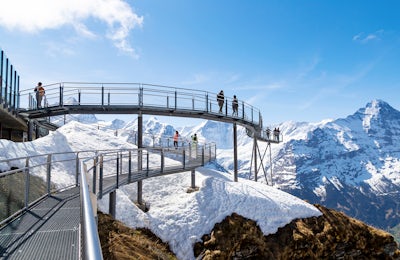
| Grindelwald – First (return) | CHF 72 | CHF 36 |
| First Cliff Walk | free | free |
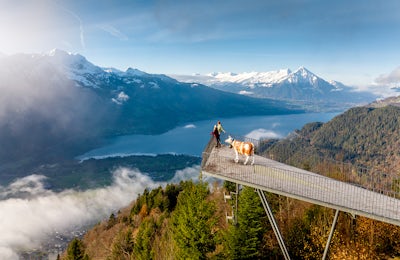
Harder Kulm (Interlaken)
| Journey | Adults | Children |
|---|---|---|
| Return | CHF 34 | CHF 17 |
Use these satellite tables to sequence spend across a week. A sane pattern is Harder Kulm on arrival day for orientation, First on a middle day when legs are fresh, and Jungfraujoch on the day with the best high-altitude forecast—cloud inversions happen often enough to justify watching webcams instead of stubbornly burning a peak fare on a white-out.
The Eiger Express row is also a mental bridge: some travellers mistakenly think the CHF 36 segment is a “cheap alternative” to the summit. It only covers the tricable hop to Eigergletscher. You still need the cogwheel continuation unless you are deliberately hiking mountaineering routes with guides and safety gear—outside that niche, treat the Express as a time saver inside a larger ticket.
Hidden costs to budget beyond the ticket
Even when the railway ticket is settled, the summit still behaves like a small alpine airport terminal: everything is flown or railed up, and prices reflect that logistics chain.
- Seat reservation: CHF 10 per person in the mandatory May–October 2026 window
- Meals at altitude: CHF 25–50 per person for a simple hot lunch with a drink
- Souvenirs: from about CHF 10 for small gifts to much more for watches or jewellery
- Lindt Chocolate Heaven: tempting from about CHF 5 upward
- Professional souvenir photos: from about CHF 20 if you pose for the automated booths
You may bring sensible packed snacks; be tidy, respect litter rules, and remember that seating indoors is limited at peak times. Many experienced travellers book a light picnic in Interlaken and splurge on coffee with a view rather than a full restaurant bill.
Pay in Swiss francs when a checkout offers a choice, and avoid dynamic currency conversion at third-party resellers—small FX mark-ups sit on top of an already premium day.
Price outlook for late 2026 and beyond
Jungfrau Railways adjusts mountain tariffs on an annual cycle like most Swiss transport companies. Recent years have seen modest single-digit increases rather than volatile jumps, but energy, insurance, and snow-service costs all feed into the model. Treat the numbers on this page as a planning baseline dated April 2026, not a contract.
Demand pressure is the other invisible “price driver”. When half of Europe books the same sunny Saturday, the marginal cost of a bad itinerary is not printed on the ticket: it is lost time in queues and missed photo light. Early booking of seat reservations and a flexible weather buffer often save more mood than any coupon code.
Exchange-rate swings matter more for overseas visitors than for locals paid in francs. When the franc strengthens against the pound or dollar, the same CHF 234.80 line item hurts more in home currency even though the rack rate on the wall in Grindelwald did not move. If you are timing a big family purchase, watch currency for the week you click pay, not the month you first googled.
If you are weighing a single splash-out day against a week of regional hiking, pair this page with the Swiss Travel Pass guide and the Jungfrau Travel Pass guide so you choose products on maths, not marketing adjectives. For lounge access and bundled extras, compare VIP options against à la carte once you list every add-on you would realistically buy on site.